Planning a beach day should feel relaxing—not like a wrestling match with tent poles. The Pacific Breeze Easy Setup Beach Tent is designed for exactly that: quick shade, a compact carry profile, and ventilation without the complexity of a traditional camping tent. In this 2026 guide, we break down what it does well, where it falls short, how it compares with other beach-shelter styles, and who should buy it.
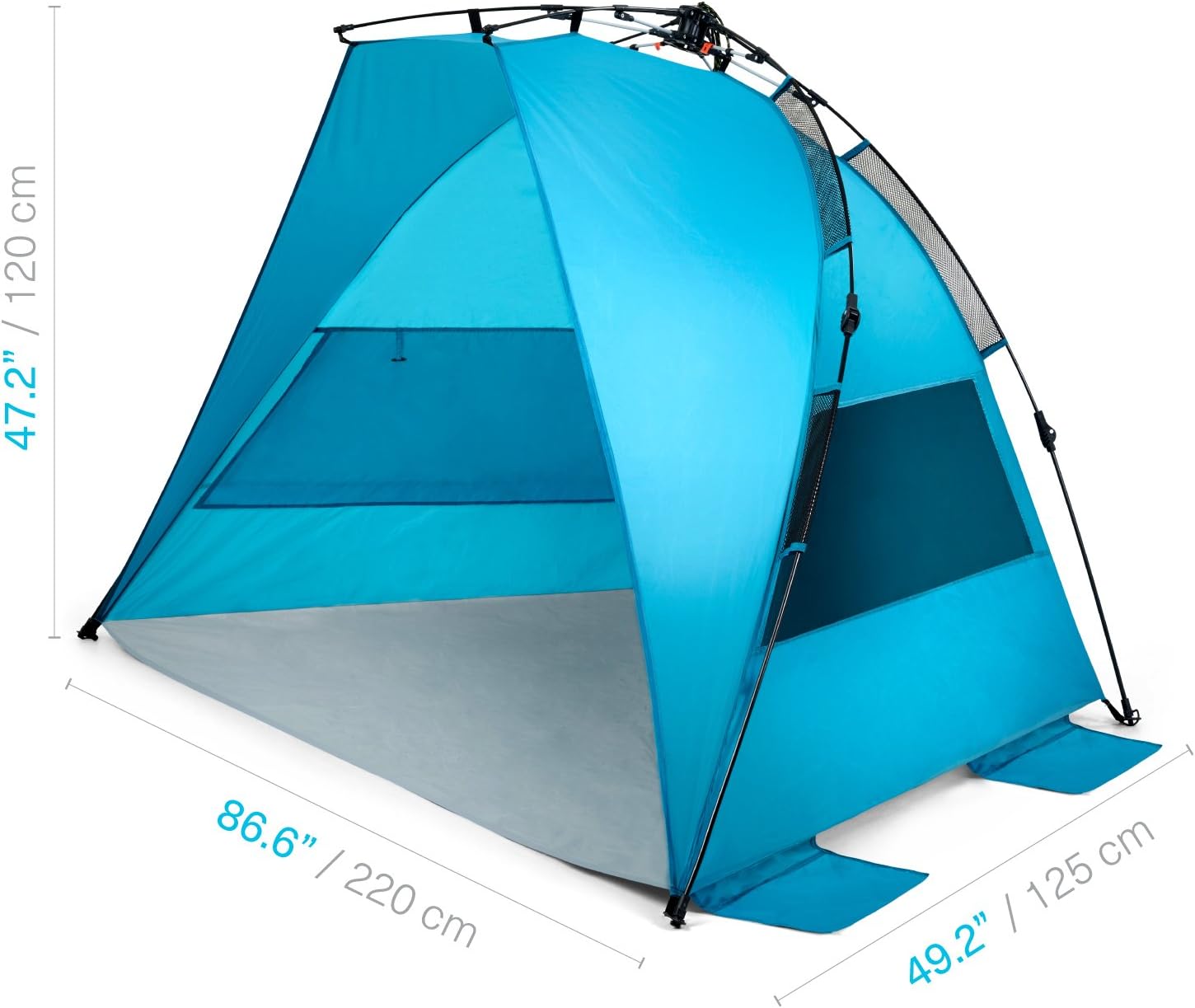
Quick note: Product listings and versions can differ. The dimensions below refer to the standard EasyUp model commonly listed at about 87 × 49 × 47 inches; the Deluxe XL is larger. Confirm the exact model and current specifications on the seller’s listing before ordering.
Pacific Breeze Easy Setup Beach Tent: Quick Verdict
Best for: couples, solo beachgoers, and small families who want a lightweight shelter that is quicker to pitch than a conventional pole tent.
Why it stands out: a pull-based hub setup, UPF 50+ fabric, mesh ventilation, and sand pockets plus stakes for anchoring.
Main trade-off: it is a low, open-front sun shelter—not a roomy walk-in cabana. Its usable space depends on the model and how many people bring chairs, bags, or a cooler.
- Sun protection: marketed with UPF 50+ protection; still use sunscreen, clothing, and shade breaks.
- Setup: designed to deploy quickly using its hub/pull system.
- Ventilation: mesh windows help air circulate.
- Portability: compact carry bag and a lightweight frame make it beach-trip friendly.
- Weather: water-repellent fabric is useful for light splashes, but this is not a storm shelter or a substitute for checking the forecast.
What Is the Pacific Breeze Easy Setup Beach Tent?
The Pacific Breeze EasyUp is a beach sun shelter with a flexible frame and a simple hub-style setup mechanism. Instead of threading several long poles through sleeves, you open the shelter and use its pull system to bring the frame into shape. The result is a semi-enclosed, low-profile space that blocks direct sun from several angles while leaving the entrance open.
The fabric is described by the manufacturer as breathable, water-repellent polyester. Mesh panels provide airflow, while integrated sand pockets and included stakes help secure the shelter. The exact number and placement of pockets, windows, and accessories may vary by model, especially between the standard tent and Deluxe XL.
Key Specifications
| Feature | What to know |
|---|---|
| Common standard-model dimensions | Approximately 87 in long × 49 in deep × 47 in high (about 220 × 125 × 120 cm) |
| Weight | Often listed around 4.5 lb for the standard model; some listings and larger versions are heavier |
| Sun rating | UPF 50+ as advertised |
| Fabric | Breathable, water-repellent polyester |
| Frame | Lightweight fiberglass-style frame system; confirm details for the exact SKU |
| Ventilation | Mesh windows/panels |
| Anchoring | Sand pockets and stakes; use the method suited to the surface |
| Included carry gear | Carry bag; accessory count can vary by version or seller |
Important: Specs found online are not always consistent, partly because standard and XL models are sometimes grouped together. Check the product label, exact model name, and seller’s included-items list before buying.
What We Like About It
1. Quick setup without a complicated pole assembly
The main appeal is convenience. The hub-and-pull design is intended to make pitching and packing down much faster than a traditional tent. That matters when you arrive with kids, beach bags, towels, and a long walk from the car. Practice the closing sequence at home once, and follow the supplied instructions rather than forcing the frame.
2. UPF 50+ fabric for added sun protection
UPF 50+ fabric is a useful feature for a beach shelter because it indicates a high level of ultraviolet protection through the tested material. But shade is not complete sun protection: UV can reflect off sand and water, and the sun’s angle changes throughout the day. Pair the tent with broad-spectrum sunscreen, protective clothing, sunglasses, and regular breaks out of direct sun.
3. Mesh ventilation helps reduce stuffiness
Mesh panels allow air to move through the shelter, which is welcome on warm days. Ventilation is not the same as active cooling, however. In hot, humid, or still conditions, the interior can still become uncomfortable. Keep the opening clear, position the tent to catch a breeze when practical, and never leave a child or pet unattended inside a hot shelter.
4. Portable enough for regular beach outings
The standard model is commonly listed at roughly 4.5 pounds and packs into a carry bag. That is a useful balance for people who want more structure than a beach umbrella without hauling a large family canopy. The packed length can still be awkward on public transport or for a long walk, so check the folded dimensions if space is tight.
5. Sand pockets and stakes offer flexible anchoring
Beach wind can turn even a lightweight shelter into a hazard if it is not secured. Fill the sand pockets fully and use the included stakes where the ground allows. Follow the manufacturer’s guidance and local beach rules. If gusts rise, the shelter begins to flex aggressively, or the wind makes anchoring unreliable, take it down and move to a safer location.
Potential Drawbacks to Consider
- Low ceiling: around 47 inches high on the standard model means most adults will crouch rather than stand inside.
- Limited footprint: it works best for lounging and sitting, not for standing, changing clothes comfortably, or hosting a large group.
- Wind still matters: sand pockets help, but no portable beach shelter should be treated as windproof. Never leave it unattended in changing conditions.
- Not a rain tent: water-repellent fabric may handle light moisture, but prolonged rain and storms are outside its intended use.
- Model confusion online: standard and Deluxe XL dimensions, weight, and accessories differ, so product-page details deserve a careful check.
- Frame care: flexible frame components can be damaged by rough folding, twisting, or forcing a stuck joint.
How It Compares With Other Beach Shelter Types
| Shelter type | Setup effort | Shade and airflow | Portability | Best use |
|---|---|---|---|---|
| Pacific Breeze EasyUp | Low; hub/pull system | Enclosed sides with mesh ventilation | Good for a structured shelter | Couples and small families wanting quick shade |
| Traditional beach umbrella | Low to moderate; requires secure placement | Open airflow, less side coverage | Varies; long pole can be awkward | People who prefer open views and easy conversation |
| Large beach canopy | Moderate; may need more setup and anchoring | Broad overhead shade and open sides | Usually bulkier | Groups and families needing a larger shaded area |
| Spring pop-up tent | Very quick to open; folding can be tricky | Often more enclosed, depending on design | Can pack into a wide, round disc | Occasional use when low cost is the priority |
This is a comparison of shelter styles, not a laboratory test. Real performance depends on the model, wind, sun angle, anchoring, and how much space your group needs.
Is the Standard Model Big Enough?
Think about what you will do inside the shelter—not just the number of people printed on a product listing. The standard EasyUp’s roughly 87 × 49-inch footprint is useful for sitting, taking a break, or stretching out one person. Two adults can use it as a compact shade spot, but beach chairs and a cooler quickly consume space. For a family with children, multiple chairs, or more gear, look at the Deluxe XL and compare its exact dimensions before deciding.
A practical rule: measure the floor space you normally occupy with your beach chairs and bags, then compare that with the shelter’s listed footprint. If you want to stand, change clothes, or keep a large group shaded at once, a taller cabana or canopy is likely a better match.
Setup Tips for a More Comfortable Beach Day
- Choose the spot first. Look for a level area away from the waterline, cliffs, dunes, and crowded walkways. Respect protected dunes and posted beach rules.
- Open the shelter according to the manual. Let the frame extend without pulling fabric or joints sideways.
- Anchor it before settling in. Fill the sand pockets and install stakes as directed. Check that the shelter is stable before placing belongings inside.
- Orient it for shade and airflow. The sun moves, so adjust the shelter’s position when practical rather than assuming one angle will shade you all afternoon.
- Keep the entrance and mesh clear. Bags and towels can block airflow or place unnecessary strain on the fabric.
- Take it down when conditions change. Do not wait for the wind to become strong. Secure loose items and follow beach safety instructions.
How to Pack It Away Without Damaging the Frame
Take a moment to learn the release and folding sequence before your first outing. Remove sand from the frame joints, release the hub mechanism as shown in the instructions, and fold the structure evenly. Avoid pushing hard against a joint that will not move. Shake out the fabric and allow it to dry fully before long-term storage; packing it away damp can lead to mildew and unpleasant odors.
Who Should Buy the Pacific Breeze Easy Setup Beach Tent?
It is a good fit if you:
- want shade without assembling a full camping tent;
- usually visit beaches for a few hours at a time;
- value a compact carry bag and simple setup;
- need a low shelter with mesh ventilation and UPF-rated fabric.
Consider another style if you:
- need standing room or a private changing area;
- regularly shade four or more adults with chairs and coolers;
- need a shelter for heavy rain or exposed, gusty conditions;
- prefer a fully open view and minimal fabric around you.
Buying Checklist for 2026
- Verify whether the listing is the standard EasyUp or Deluxe XL.
- Compare the listed dimensions and weight—not just the product title.
- Confirm that the carry bag, sand pockets, and stakes are included.
- Check the current price, shipping cost, return window, and warranty terms.
- Look for recent buyer feedback mentioning setup, folding, and frame durability.
- Check the manufacturer or seller’s instructions for anchoring and care.
The manufacturer’s FAQ has described a one-year limited warranty and recommends using sand pockets on sandy ground or stakes where sand is unavailable. Confirm that those terms still apply to your purchase and region before ordering.
Frequently Asked Questions
Does the Pacific Breeze Easy Setup Beach Tent have UPF 50+ protection?
The product is marketed with UPF 50+ sun protection. Follow the care instructions and remember that UV can reach you from reflected light and outside the shaded area, so use additional sun-protection measures.
How many people fit inside?
The standard model is best treated as a compact shelter for one or two people, depending on whether you sit or lie down and how much gear you bring. The Deluxe XL offers a larger footprint. Use the dimensions of the exact model to judge fit rather than relying only on advertised capacity.
Is it waterproof?
It is generally described as water-repellent, not as a dedicated waterproof storm shelter. It may handle light splashes, but do not rely on it for prolonged rain or severe weather.
Can it be used in windy conditions?
It includes anchoring features, but wind safety depends on gusts, sand conditions, and correct setup. Fill the sand pockets, use stakes where appropriate, supervise the shelter, and take it down if conditions become unsafe.
Is it easy to fold back up?
The design is intended for quick pack-down, but the release sequence may take practice the first time. Follow the supplied instructions and never force the frame.
Where should I buy it in 2026?
Start with the manufacturer’s current product information and its listed retailer, then compare reputable sellers. Check whether the exact model is in stock, the total delivered price, return policy, and warranty coverage. Availability and prices can change, so they should be verified at checkout.
Final Verdict
The Pacific Breeze Easy Setup Beach Tent remains an appealing option for beachgoers who prioritize fast setup, portable shade, and ventilation over standing room or a huge footprint. Its UPF 50+ fabric and anchoring features are useful, provided you treat sun protection and wind safety seriously. For a couple or a small beach setup, it is a sensible shortlist candidate. For a larger family, taller shelter, or rough-weather use, compare the Deluxe XL and larger canopy designs before buying.
Bottom line: check the exact model, dimensions, and included accessories—and choose a shelter that fits your real beach routine, not just the headline features.